
Sister Cities – Gardnerville, NV USA – Ortzaize (Ossès) France
About Ortzaize | Ossès
https://ortzaize.eus/fr/
The Basque People & Their Ancient Homeland
The Basque people are one of the oldest and most distinct peoples in Europe, with origins that predate the formation of both France and Spain by thousands of years. Their homeland, known in Basque as Euskal Herria (“the land of Basque speakers”), spans the western Pyrenees along what is today the border of southwestern France and northeastern Spain.
Ask a Basque person whether they are French or Spanish, and the answer is neither — they are Basque. Euskal Herria is traditionally divided into seven provinces, four within present-day Spain and three within present-day France, including Lower Navarre, the province where Ortzaize is located. Though gradually absorbed into kingdoms of France and Spain during the medieval period, the Basque people maintained their distinct language, customs, and identity across centuries of political change.
Their language, Euskara, is unlike any other on earth — a language isolate with no known connection to any living or historical language, believed to be among the oldest spoken in Europe. It remains a living language today, spoken with pride across the Basque homeland and in communities like Gardnerville that carry the tradition forward.
That same enduring identity — rooted in language, community, and a deep connection to the land — is what Basque immigrants brought to the Carson Valley in the late 19th century, and what continues to thrive here today.
Overview
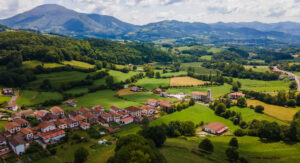
Ortzaize (Ossès in French) is a picturesque Basque village known for its pastoral landscape, historic homes, and deep-rooted cultural traditions. Surrounded by rolling hills and mountain peaks, the area offers a blend of natural beauty and living heritage that reflects centuries of Basque life.
Location
Ortzaize is located within the historic province of Lower Navarre. Set in the foothills of the Pyrenees, it lies about 9 miles (14 km) north of Donibane Garazi (Saint-Jean-Pied-de-Port in French). The village is surrounded by some of the region’s iconic mountain peaks, including Artzamendi and Baïgura, which frame its scenic landscape. The Laka stream winds gently through Ortzaize and its surrounding neighborhoods, contributing to its peaceful, pastoral setting.
Population
Ortzaize is a small rural village with approximately 900 residents, offering a close-knit community atmosphere rooted in tradition.
Economy & Key Industries
The local economy reflects its rural and cultural heritage, with a focus on:
- Agriculture and pastoral farming
- Production of regional specialties like Ossau-Iraty cheese and Irouléguy wine
- Craftsmanship and small local businesses
- Growing tourism, especially for outdoor recreation and cultural experiences
Cultural Highlights
Ortzaize is rich in Basque culture and tradition:
- Strong presence of the Basque language (Euskara)
- Traditional red-and-white Basque architecture, also known as the Bas-Navarraise style, houses
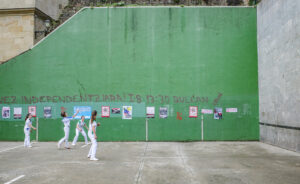
- Historic sites like the 16th-century Saint-Julien d’Antioche Church, built on the foundations of a 12th-century chapel and made entirely of pink sandstone. The town fronton is built against it.
- The fronton is a cornerstone of Basque culture—a communal space where the traditional sport of pelota is played. More than just a playing court, the fronton is a place of connection, bringing together generations to share in competition, conversation, and cultural tradition.
- Ortzaize celebrates its rich culture through a vibrant calendar of annual local festivals & traditions:
- First Weekend of May – Artisan Village Open House. A festive kickoff to the season featuring open studios, live music, and a market showcasing local artisans and producers.
- Late August – Annual Village Festival (Besta in Basque)
A lively multi-day celebration with traditional Basque activities, including pelota matches, dance performances, parades, and evening concerts. - Late September – Apple Festival. A celebration of local heritage with apple tastings, demonstrations, and exhibitions of traditional tools and practices
- Like Gardnerville, Ortzaize places a high value on family, community gatherings, agriculture, and cultural pride.
Distance from Gardnerville
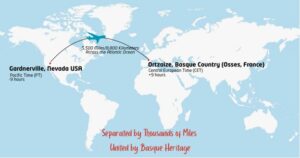
Ortzaize and Gardnerville are separated by approximately 5,500 miles (8,800 km)—a distance that spans continents yet unites them by shared heritage and values.
Sister Cities Request
Gardnerville is home to the 150 member strong Mendiko Euskaldun Cluba (Mountain Basque Club named for the Sierra Nevada range surrounding the Carson Valley). In February 2025 members of the club requested the Town of Gardnerville officially establish a Sister Cities Partnership with Ortzaize or Ossès, France. At the March 4, 2025 Gardnerville Town Board Meeting town staff was directed to pursue the partnership.
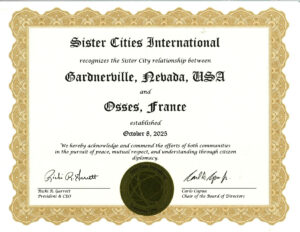
Over the next few months, with the assistance of the Mendiko Euskaldun Cluba, formal contact was made with the Village of Ortzaize. A proclamation was drafted and agreed to by both municipalities. The Town of Gardnerville joined Sister Cities International. The proclamation was formalized in Ortzaize on October 8, 2025. The Town of Gardnerville Board approved the proclamation on December 2, 2025. The partnership bears the signatures of Mayor Jean-Marc Oçafrain and Chairman William Chernock.
While the formal partnership is with Ortzaize, this village represents something larger in meaning for the Carson Valley Basque community. Many of the Basque immigrants who settled in the region came from small rural villages across the Pyrenees in both France and Spain. Ortzaize serves as a symbolic link to those many villages—reflecting the shared heritage, traditions, and rural mountain life that shaped generations of Basque immigrants in the Carson Valley.
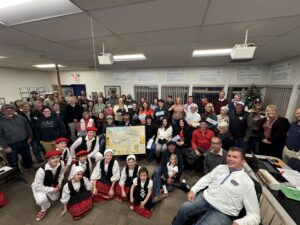
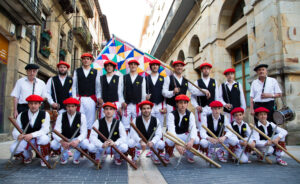
The Gardnerville Board Meeting Chambers was filled with members of the Mendiko Euskaldun Cluba who held signs representing their specific ancestral villages, shared Basque hors d’oeuvres, and enjoyed a cultural youth dance performance. This Sister Cities Partnership is the the first to be registered with Sister Cities International in the State of Nevada.
About Sister Cities International
Sister Cities International was founded by President Dwight D. Eisenhower in 1956 to promote peace through people-to-people diplomacy. For nearly seventy years, SCI’s leadership and volunteers have established thousands of partnerships between U.S. cities and cities worldwide.
Basque Immigration in Gardnerville & Carson Valley
The Basque presence in Gardnerville and the Carson Valley dates back to the late 1800s and has become an important part of the region’s cultural and economic history.
Beginning in the 1890s, Basque immigrants arrived in Nevada to work primarily in the sheep industry. Drawn by the open rangelands of the Great Basin, many came as sheepherders—often living in remote camps across the mountains and valleys of Douglas County. By the late 1890s, Basque shepherds were tending tens of thousands of sheep across Carson Valley, helping to establish one of the region’s most important early industries.
As their numbers grew, Gardnerville became a key gathering place for Basque workers. After long seasons in the mountains, many sheepherders came into town during the winter months, where Basque boarding houses, inns, and restaurants began to emerge. These establishments provided not only meals and lodging, but also a sense of community, language, and cultural continuity far from home.
By the early 20th century, Basque-owned businesses were contributing significantly to the local economy. Several inns and boarding houses opened in Gardnerville in the 1910s and 1920s, and Basque-style hospitality—especially communal family-style dining—became a lasting tradition in the region.

Over time, Basque immigrants and their descendants transitioned from sheepherding into ranching, hospitality, and small business ownership, becoming deeply integrated into the social and economic fabric of Carson Valley. Their influence remains visible today in local restaurants, cultural traditions, and community organizations that continue to celebrate Basque heritage.
Today, Gardnerville stands as one of the enduring centers of Basque-American culture in Nevada, reflecting more than a century of immigration, hard work, and cultural exchange.

You must be logged in to post a comment.